Paint Correction Before Ceramic Coating: Why Order Matters
A coating is only as good as the surface it bonds to, which is why the polishing comes first.
October 27, 2026 · 4 min read
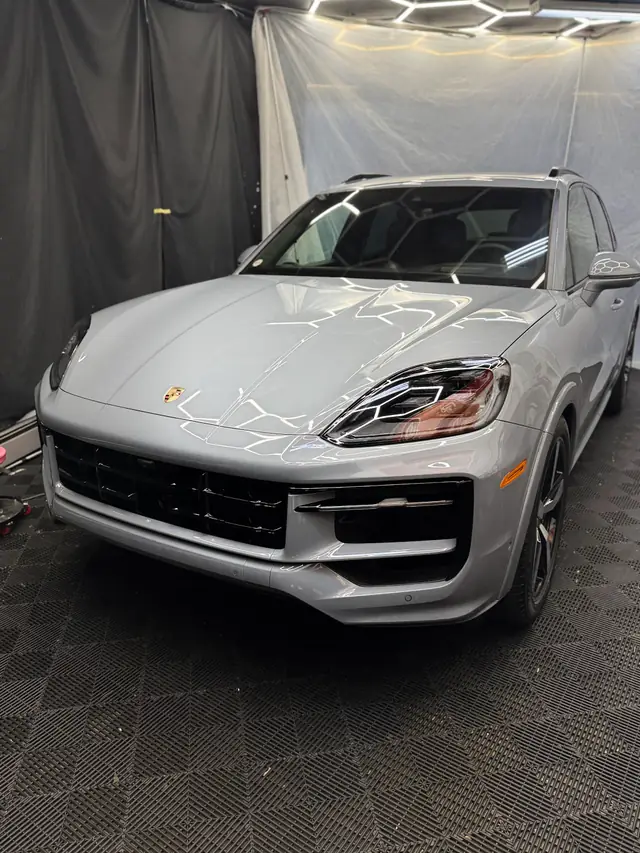
Every so often someone calls the shop and asks for a ceramic coating on a car with swirl marks all over the hood. It is a reasonable thing to want. Coat it, protect it, done. But the order of the work matters more than almost anything else about the job, and it is the reason a coating always comes after paint correction, never before.
A coating seals in what is already there
A ceramic coating is a thin, hard layer that bonds to your clear coat. It is clear, and it is meant to stay put. That is the whole point of it, and it is also the catch. Whatever is on the surface when the coating cures is what you live with.
If the paint has swirl marks from automatic car washes, fine scratches from a dry towel, or a hazy patch where someone once waxed over dirt, the coating will not hide any of it. It will make the paint glossier, and glossier paint shows defects more clearly, not less. You would be paying to preserve the exact flaws you wanted gone.
What paint correction actually does
Paint correction levels the clear coat so the scratches stop catching light. At Auto Perfection the process is a hand wash, a clay bar to pull bonded grit off the paint, and then machine polishers. We take off a very small amount of clear coat to flatten the edges of the scratches until they disappear to the eye. Nothing is painted over and nothing is filled in. What you see afterward is your own paint, cleaner.
How far we go depends on the car. On newer vehicles we typically reach about 40 to 50 percent defect removal. On older vehicles it is 80 percent or more. Those are honest numbers, not a promise of a flawless mirror on every panel. A scratch that has gone through the clear coat cannot be polished out, and we will tell you when we see one.
One customer brought in a black Jeep Gladiator that a car wash had scratched all over. She wrote in her review that we made it look brand new again. That is what a day of correction looks like on dark paint, where every flaw shows.
The right order, step by step
- Wash and clay first. Grit left on the paint gets dragged around by the polisher and makes new scratches.
- Correct the paint. This is where the finish is decided, so it gets the time it needs.
- Clean the surface so no polishing residue is left behind. The coating has to touch bare clear coat to bond.
- Apply the coating in thin, even coats, panel by panel.
- Let it cure. The coating needs time to harden fully after it goes on, so the first days matter.
Skip or shuffle any of those and the result suffers. A coating over leftover wax or polish oil will not bond the way it should. A coating over uncorrected paint will lock in the swirls.
Can you coat now and correct later?
Not really. Once the coating is on, polishing the paint means polishing the coating off, and then you have paid for a layer you just removed. The only sensible time to correct paint is before the coating goes on, when the surface is open and the clear coat is bare.
That is also why we require an exterior detail before any ceramic coating. It is not an upsell. It is the prep that decides how the finished car looks.
What it costs
Ceramic coating at our shop starts from $700 plus the detail package you choose. Paint correction is an extra charge, and we assess it when you drop the car off, after we have seen the paint under the light. We would rather quote you honestly at the car than guess over the phone, because two cars of the same model can have very different paint.
Our prices are minimums for vehicles in moderate condition, and they can move up with the size and condition of the vehicle. A daily driver that has been through years of automatic washes will need more correction than a garaged car that is two years old.
After the coating
We are certified in applying ceramic coating, and the products we work with include Opti-Coat Pro, C.Quartz and Ceramic Pro. A top-coat is recommended after six to seven months to keep the surface performing. Between visits, wash gently and avoid brush-style automatic washes, which put swirls back into the very paint you just had corrected.
Start with the paint
If you are thinking about a coating, the best first step is a look at your paint in person. Bring the car by 400 High Street in Hackettstown, or read the Paint Correction and Ceramic Coating pages under Services on this site. You can also call us at (908) 813-1130 and we will tell you what your car needs before anything else.
Auto Perfection, (908) 813-1130
Call (908) 813-1130More articles
PPF or Ceramic Coating? What Each One Protects
One is a physical shield and the other is a chemical one, and your driving decides which you need.
What a Full Interior and Exterior Detail Includes
Our whole package, step by step, so you know exactly what happens to your car.